At-Home Pilates Routine with Mat and Reformer Exercises
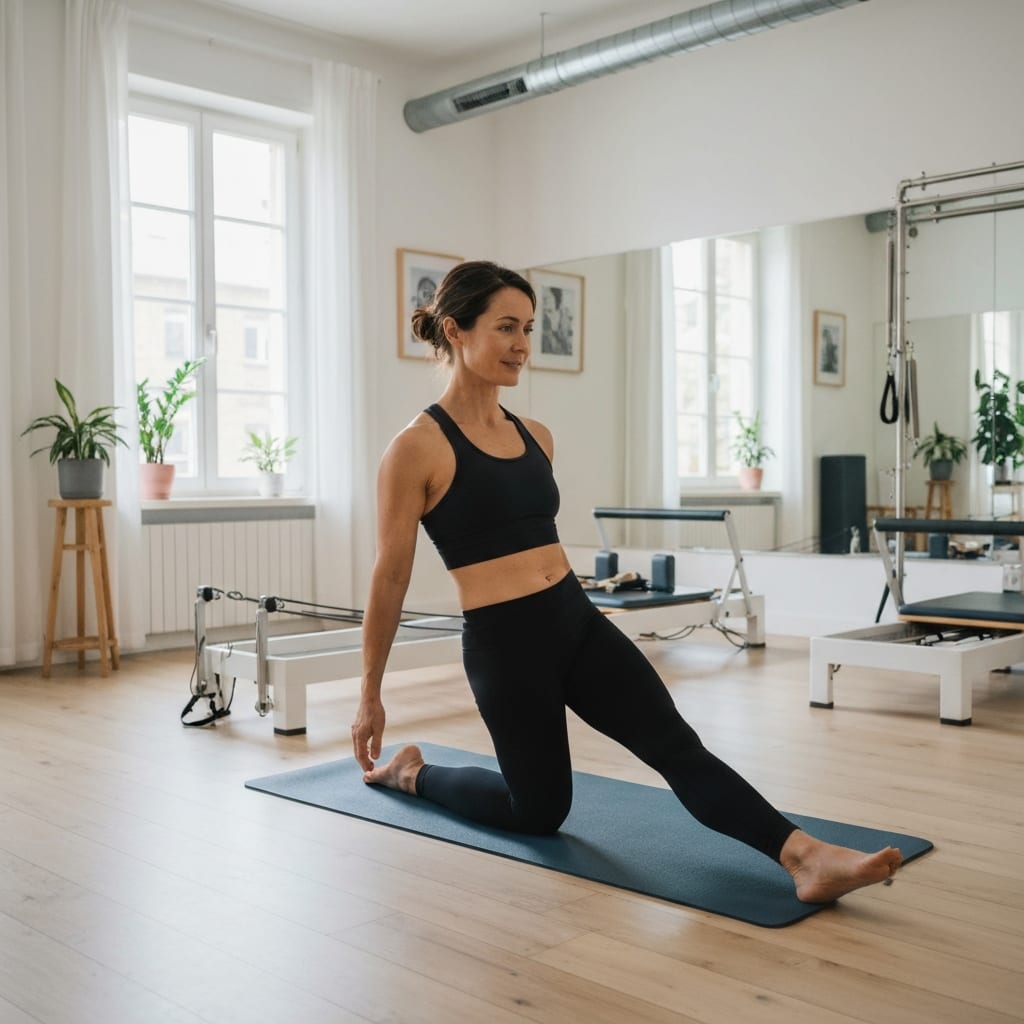
At-Home Pilates Routine with Mat and Reformer Exercises
Pilates practice is an excellent way to improve flexibility, strength, and posture, and can be especially beneficial for women seeking to reduce chronic lower back pain. According to organizations like the WHO, a 10-minute daily Pilates routine can reduce chronic lower back pain by an approximate percentage. In this article, we will present an at-home Pilates routine with mat and reformer exercises that you can follow to improve your overall health.
Benefits of Pilates
Pilates is an exercise method that focuses on core strengthening, improving flexibility and posture, and reducing stress. Some of the benefits of Pilates include:
- Improved flexibility and mobility
- Strengthening of the core and back
- Reduction of chronic lower back pain
- Improved posture and alignment
- Reduced stress and anxiety
At-Home Pilates Mat Routine
Basic Exercises
To begin, we will introduce some basic Pilates exercises you can do at home with a mat. These exercises are ideal for beginners and can be modified to suit your fitness level.
- Box exercise: Lie on the mat with your knees bent and feet flat on the floor. Then, lift your pelvis up and down, keeping your back straight.
- Bridge exercise: Lie on the mat with your knees bent and feet flat on the floor. Then, lift your pelvis up and down, keeping your back straight.
- Wheel exercise: Lie on the mat with your knees bent and feet flat on the floor. Then, lift your pelvis up and down, keeping your back straight.
At-Home Pilates Reformer Routine
Advanced Exercises
Once you have mastered the basic exercises, you can progress to more challenging exercises with a reformer. These exercises are ideal for those looking for a greater challenge and wanting to improve their physical fitness.
- Strap exercise: Sit on the reformer with your knees bent and feet flat on the floor. Then, lift your pelvis up and down, keeping your back straight.
- Carriage exercise: Sit on the reformer with your knees bent and feet flat on the floor. Then, lift your pelvis up and down, keeping your back straight.
- Pulley exercise: Sit on the reformer with your knees bent and feet flat on the floor. Then, lift your pelvis up and down, keeping your back straight.
Contraindications and Precautions
It is important to note that Pilates is not suitable for everyone. If you have any of the following conditions, it is advisable to consult with a doctor before starting Pilates:
- Back or neck injuries
- Heart health problems
- Pregnancy or postpartum
- Osteoarthritis or arthritis
Frequently Asked Questions
How much time should I practice Pilates daily?
The amount of time you should practice Pilates daily depends on your fitness level and goals. However, it is recommended to start with 10-15 minute sessions per day and gradually increase the time as you feel more comfortable.
Can I practice Pilates at home without an instructor?
Yes, you can practice Pilates at home without an instructor. However, it is recommended that you follow the instructions of an experienced instructor and ensure you are performing the exercises safely and effectively.
What is the best time to practice Pilates?
The best time to practice Pilates depends on your schedule and personal preferences. However, it is recommended to practice Pilates in the morning or in the afternoon, when you feel most rested and focused.
Conclusion
Pilates practice is an excellent way to improve flexibility, strength, and posture, and can be especially beneficial for women seeking to reduce chronic lower back pain. With an at-home Pilates routine featuring mat and reformer exercises, you can improve your overall health and reduce chronic lower back pain. Always remember to consult with a doctor before starting Pilates, especially if you have any pre-existing medical conditions.
This content is for informational purposes only and does not substitute for professional medical advice.